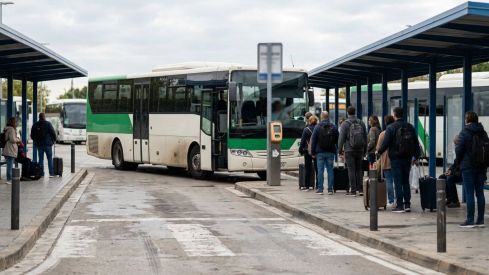
The Department of Territory has extended by six years the road transport concession contracts that were due for renewal in 2028. This strategic decision seeks to guarantee the continuity of the service in a context of growing demand and the urgent need to modernize fleets.
4.8 million euros will be allocated specifically to the regions of Tarragona to reinforce twenty-two regular services. This economic injection is part of a global package of 21.5 million euros aimed at covering the lines with the highest passenger demand throughout Catalonia.
The railway crisis boosts bus use
Manuel Nadal, secretary of Infrastructures for Mobility, justified the measure due to the imperative need to decarbonize the vehicle fleet and absorb the excess passengers derived from problems on the train. The data reflect a structural change in citizens' travel habits.
The regular lines of Campo de Tarragona went from registering 593,486 users in 2014 to reaching almost 3.5 million in 2023. This massive increase shows a profound transformation in the interurban mobility of the region.
"People value the service as reliable, convenient, and fast" - José Albert Vallcorba, manager of Grupo Plana
Grupo Plana surpassed 8.5 million travelers last year, with 2.5 million on the coast line and six million on routes to the interior. The company has had to adapt its operations to respond to unpredictable demand peaks.
Since the start of the works on the Garraf Tunnels on March 16, nearly 1,150 daily users have been using the direct bus between Tarragona and Barcelona. Of this total, 900 correspond to express services and 250 to routes that include a stop at the airport.
Structural growth beyond the works
José María Chavarría, president of the Catalan Business Federation of Passenger Transport (FECAV), clarifies that the increase in travelers does not respond exclusively to the recent railway chaos. The sector observes a consolidated trend over the last five years.
Chavarría attributes this phenomenon to the fact that young people no longer buy passenger cars, added to bonus policies, low-emission zones, and a favorable European trend towards public transport. These combined factors have altered the traditional equation of private mobility.
Catalonia's interurban network registered 90 million users last year, which represents a 15% increase compared to 2022. Current estimates predict a new increase of between 10 and 15% for this fiscal year.
The contract extension includes a demanding environmental clause. Three out of four vehicles must use clean fuels before January 1, 2029.
Bottlenecks and lack of technological integration
Despite the improvement in the offer, serious deficits persist in tariff and technological integration. The deployment of T-Mobility remains unfulfilled, although the first timelines pointed to 2024, which keeps technological renewal blocked for widespread payment by credit card.
The ATM of Campo de Tarragona lacks a single portal that groups all services and regular lines, making it difficult for users to plan their trips. This information fragmentation reduces the system's competitiveness against private vehicles.
During the interruption of the railway service between Tarragona and San Vicente de Calders, the reinforced services registered an average of 700 users daily. After the works concluded, demand dropped to about 550 passengers daily before picking up again to double the passengers compared to the previous Transport Alternative Plan.
Companies from Tarragona request a HOV lane for the Gran Via entrance in Barcelona. Their objective is to prevent traffic problems from affecting travel times and to maintain the competitiveness of buses compared to trains.