Pere Balcells i Masgoret, known as el Nen de Prades, was one of the most prominent names of Carlism in southern Catalonia during the Third Carlist War, a conflict that began in 1872 and definitively ended in 1876 with the defeat of the Carlists and the consolidation of the Bourbon regime of Alfonso XII.
Native of Prades, where he was born on March 31, 1855, Balcells was also known as the Shepherd of Prades or the Tiger of Priorat. His figure remained linked to the geography of the territory. He was the son of a shepherd and knew well the orography of Alt Camp, Baix Camp, Conca de Barberà and Priorat, a factor that proved key in his armed activity.
From Carlist volunteer to leader of a numerous band
With 17 years he left Prades and presented himself as a volunteer in the Carlist band of Lieutenant Colonel Moore. Already in the spring of 1874, with 19 years, he organized his first squadron with about twenty men. Later he came to command about 200.
The Carlist commanders assigned him the rank of lieutenant, although it is recorded that he never wanted to wear insignia or military rank. The movement in which he fought identified itself with the motto God, homeland, and king.
Among the episodes that marked his trajectory appear the ambush of dels Motllats, pointed out as the action in which he would have defeated and made capitulate a much superior contingent, the Parany de Rocabruna, the annihilation of Petrol's party and the surprise of la Mussara.
The Petrol Tower and the liberal pressure in the territory
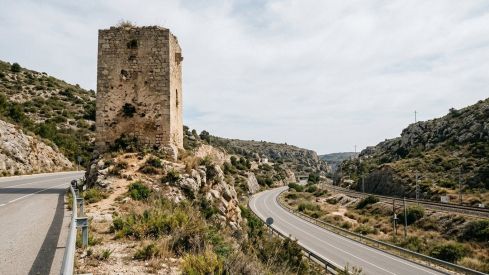
The construction of the Torre del Petrol is related to the repeated liberal defeats and the need to hinder the incursions of the Nen de Prades. It is a watchtower located in the strait of la Riba, which still stands today and can be easily seen from the C 14 between la Riba and Picamoixons.
That deployment gives an idea of the military pressure over an area where Balcells moved with ease. His knowledge of the terrain allowed him to maintain armed activity even when the course of the war was already beginning to lean in favor of the liberal side and the new political framework opened after the Sagunto pronouncement of 1874, led by General Martínez Campos.
Rescues, withdrawal and the advance of the end of the war
By the end of 1874, the new reign of Alfonso XII caused many Carlist combatants to flee towards France or surrender, taking advantage of the amnesty granted by the Government. Despite this, the Nen de Prades continued fighting during the first third of 1875, with actions in which he took hostages and demanded ransoms.
In April 1875, following orders from the Carlist high command, he headed towards Maestrazgo to reorganize his group, rest, and receive new instructions. The historian Robert Vallverdú places him in a context of struggle also aimed at combating the caciques.
"Let's see who collects more" - phrase attributed to Nen de Prades
That expression is attributed to him after throwing a cap full of coins, in one of the preserved passages about his behavior at the head of the group.
The siege of Xerta and his death on the way to Tortosa
The outcome arrived in Xerta. The liberal army, more numerous and better equipped, surrounded the town. When the Nen de Prades and his men arrived at the municipality they tried to defend themselves, but ended up being subdued.
In an escape attempt, Pere Balcells and two of his companions were seriously injured. El Nen de Prades died shortly before reaching the Tortosa hospital. Among the Carlist ranks, however, the version spread that he had not died from his wounds, but had been shot.
His death occurred in the final phase of a war that was closed in 1876 with the definitive defeat of Carlism. Even so, the movement maintained an echo decades later and experienced another of its moments of maximum tension in 1976, in the well-known events of Montejurra, where there were two fatalities.
The figure of Nen de Prades became fixed between military history and the popular memory of the regions of Tarragona, linked to a guerrilla war in which the terrain, mobility and knowledge of the country had a decisive weight until his last days.