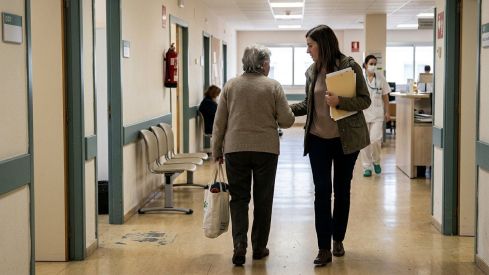
A municipal project in Lleida accompanies homeless people or people in vulnerable situations who suffer from illnesses or face the end of their lives with the aim that they have the maximum possible dignity during the process. The service works with a team of 15 social workers, educators, and family workers.
The initiative serves users over 18 years old, of all ages, with physical or mental pathologies, specific or long-term. It also targets both men and women who live on the street, in inclusion flats or in substandard housing.
Healthcare accompaniment and support in the day to day
The project undertakes basic tasks such as requesting medical appointments and accompanying users to visits to facilitate the understanding of clinical information. It also offers help to acquire medication, especially for people with low incomes or chronic diseases, as well as its administration.
The care extends to hospital admissions. In these cases, the workers provide practical and emotional support. Alba Pirla, head of the unit, explains that the accompaniment includes aspects such as taking clothes to the hospital or simply keeping company with the admitted person.
Coordination with social resources and hospitals
The municipal device works in collaboration with the Jericó foundation and with the Arnau de Vilanova and Santa Maria hospitals to guarantee care continuity. The project coordinator, Marta Pardell, places this coordination as a central piece to maintain the follow-up of the most fragile cases.
The team also places the focus on psychosocial accompaniment, especially in complex situations in which users must make relevant decisions about their health, among them amputations or chemotherapy treatments.
"It is very important that they have someone trustworthy to talk to and who helps them process information and make informed decisions, always respecting the individual's will" - Olga Pérez, social worker
A support that goes beyond the medical field
The intervention is not limited to healthcare. The service addresses daily needs that can be decisive for sustaining the link with care resources and the administrative environment.
"Our work goes beyond medical accompaniment, it includes day-to-day aspects such as even facilitating a mobile phone for important communications or a postal address to receive mail" - Amalia Tienza, family worker
The municipal project seeks to support people in situations of maximum vulnerability at an especially delicate moment in their lives, combining social support, health monitoring, and personal accompaniment so that they can face illness or the end of life in better conditions.