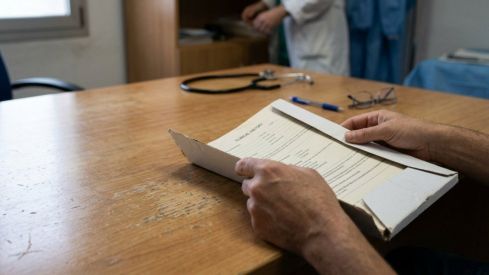
A study by the Universitat Pompeu Fabra has found that not guaranteeing healthcare in the patient's preferred language can reduce the accuracy of diagnoses and the quality of care. The research analyzes how a consultation changes when a Catalan speaker has to express themselves in Spanish instead of Catalan.
The paradox presented by the work is that bilingualism does not prevent the problem. The data reviewed by the researcher show that a patient capable of speaking two languages does not always describe pain in the same way, does not understand medical instructions in the same way, nor faces the visit with the same confidence when not using their preferred language.
The UPF thesis reviewed studies that detect more errors and longer stays
The research is part of the doctoral thesis of Joana Pena-Tarradelles, a native of Lleida, and addresses for the first time the impact of using Spanish when attending to Catalan-speaking patients. In a first phase, the work reviews international literature on linguistic discordance in healthcare and differentiates between migrant populations and bilingual native populations.
In migrant populations, the studies analyzed report lower adherence to treatments, worse diagnoses, more medical errors, unnecessary tests, and longer hospital stays. In native linguistic minorities, such as French speakers in Canada or Swedish speakers in Finland, the review detects more complications, longer hospitalizations, and more difficulties in understanding healthcare instructions.
Furthermore, the literature suggests that bilingual patients describe pain better and reduce anxiety and stress when they can express themselves in their preferred language. This change also increases confidence with healthcare personnel, a factor that the researcher places at the center of the clinical relationship.
"If they speak in their language, the patient has more confidence" - Joana Pena-Tarradelles, researcher, Universitat Pompeu Fabra
This effect is not limited to a subjective perception. Among the materials reviewed is the testimony of a patient in a study conducted in Canada that summarizes the difference between mastering two languages and being able to use them in a situation of physical vulnerability.
"I am perfectly bilingual, but not when I am in pain" - patient cited by Joana Pena-Tarradelles, researcher, Universitat Pompeu Fabra
Preliminary data in Catalonia suggest less comfort speaking Spanish
Now, the second part of the study will examine for the first time the consequences of not receiving healthcare in Catalan for speakers of this language in Catalonia. Preliminary data already show that some Catalan-speaking patients do not feel as comfortable expressing themselves in Spanish as they do in Catalan during medical consultations.
The impact is also not homogeneous. Previous research conducted in Wales and the Basque Country indicates that linguistic discordance affects vulnerable groups more intensely, including children and the elderly, a pattern that the thesis uses as a reference for the analysis in Catalonia.
The work also opens the door to studying whether this same linguistic discordance influences other public services, including legal defense or administrative management. In this regard, the researcher proposes strengthening the presence of specialists and resources to adapt language policies to the real evolution of language use, as has already been observed in the use of Catalan in universities.
Along with this expansion of the analysis, the study calls for more sociolinguists and more financial resources to guarantee job stability in research and to adjust language policies to changes in language use.