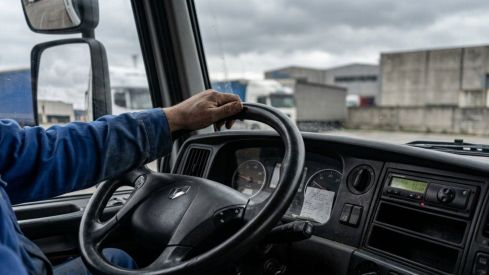
The increase in the price of diesel is squeezing road freight transport companies in the Girona regions, where fuel represents between 30% and 40% of the cost of a trip. The rise also comes at a time when the sector can revise tariffs by law when fuel increases by more than 5%, but in practice, it does not always manage to pass on this extra cost to its clients.
Therein lies the main tension for companies. Although the regulation allows for the pass-through of fuel price increases, applying this revision is not automatic, and the margin narrows just when filling the tank of a heavy-duty truck can already exceed 1,300 euros.
Diesel A has risen by almost 19% in Girona since February
In Girona, the price of Diesel A is almost 19% higher than in February, when the Iran conflict broke out, according to data from the ministry's fuel price Geoportal. During April, this increase reached close to 25%.
At these levels, a vehicle with a capacity of around 800 liters needs approximately 1.69 euros per liter to refuel completely. The bill thus exceeds 1,300 euros for each full tank of a heavy-duty truck.
For companies in the sector, the impact is direct because fuel accounts for between 30% and 40% of the total cost of each service. The effect is noticeable in both regular routes and new orders.
Companies add surcharges, but do not always collect the full extra cost
The law allows for the revision of transport prices when fuel rises by more than 5%. On paper, this mechanism should allow companies to adjust their tariffs to the new scenario.
Jordi Esparraguera, director of Asetrans, maintains that the actual application of this clause is more complicated. In his assessment, it is difficult to pass on what is truly corresponding, even though the rule supports this revision.
"It is difficult to pass on what is truly corresponding" - Jordi Esparraguera, director of Asetrans
For regular services, companies maintain the base rate and then add the increase linked to fuel. In contrast, new jobs already come out with higher prices to absorb the current cost of diesel from the outset.
Along with the rise in fuel, the administration's lack of clarity on aid has extended distrust between transporters and clients. The sector also criticizes that the proposed measures do not distinguish clearly enough between private and professional consumers, despite the much greater dependence on fuel in freight transport.
The sector fears the increase will reach the final price of products
If diesel remains at these levels, companies foresee a chain reaction of the extra cost. The increase would go from the transporter to the client, from there to the product, and finally to the consumer.
Esparraguera summarizes this risk with a warning about the resilience of all operators. Everything will depend on the chain holding up, states the director of Asetrans.
The head of the employers' association adds that the sector needs this scenario to last "the less, the better," at a time when refueling a heavy-duty truck in Girona can already exceed 1,300 euros.