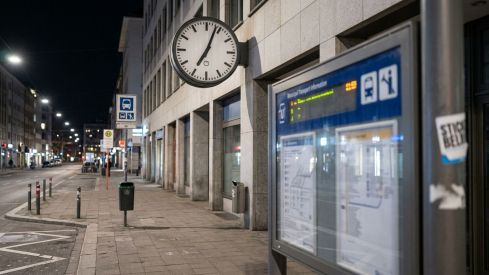
The early morning of Sunday, March 29, 2026 daylight saving time will return throughout the European Union. The change will happen at two in the morning, at which point the clock will directly jump to three, so clocks will have to be moved forward one hour.
The measure will remain in force, at least, until 2026, within the system of seasonal changes that is applied across the EU. The objective that remains on the table is to reduce energy expenditure through a greater utilization of daylight hours.
An adjustment that remains despite the open debate
The time change was implemented almost 50 years ago to comply with a European directive aimed at energy saving. Since then, the change to summer time takes place on the last Sunday of March and the return to winter time, months later, is part of the usual calendar.
The debate about its continuity, however, remains open. In a non-binding survey conducted in Europe, 64% of participants voted to permanently keep daylight saving time. Despite this, negotiations to set a stable time throughout the year remain blocked due to a lack of consensus among the different countries.
The Government wants to propose the end of seasonal change
Last October, the President of the Government, Pedro Sánchez, announced his intention to propose in the European Union the end of seasonal time change. In his statements he argued that this practice has lost its usefulness.
"It no longer makes any sense" - Pedro Sánchez, President of the Government
"It barely allows for energy saving and has a negative impact on people's health" - Pedro Sánchez, President of the Government
The proposal, for now, clashes with the lack of agreement at a European level, which keeps in force the current system of advancing and setting back the clocks twice a year.
The impact on health is usually mild and transient
From the medical field, the neurologist of Hospital Clínic de Barcelona Cales Gaig has explained that this time change alters the circadian rhythm, although in a limited way and for a short time.
"Mildly and in 24 hours our brain adapts" - Cales Gaig, neurologist of the Hospital Clínic de Barcelona
"It's like a small jet lag that lasts one day" - Cales Gaig, neurologist at Hospital Clínic de Barcelona
Thus, barring last-minute changes in the European framework, the date will remain marked on the calendar and in the early morning of March 29, 2026, it will be time to sleep one hour less to enter into summer time.