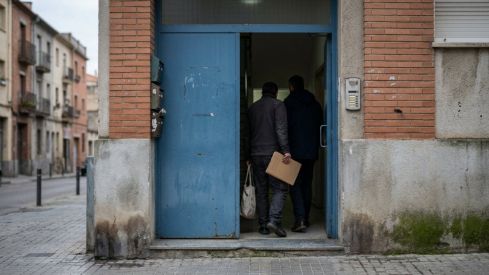
The Support-Girona Foundation consolidated its position as the entity with the largest volume of support in Catalonia during the 2025 fiscal year. Official records confirm that 209 new supports were activated throughout the year, raising the total number of active cases to 1,478 compared to 1,398 in the previous period.
The current work pace places the average at the opening of one new file each day. This dynamic reflects a growing social demand that forces the organization to expand its human and technical resources to maintain the quality of care throughout the Girona demarcation.
Structural Complexity and Homelessness
The interventions are no longer limited to simple administrative procedures, but rather address multifactorial realities where the lack of stable housing, substance abuse, and the absence of legal documentation converge. Of the 209 new measures adopted, 29 presented a high degree of complexity, which represents one out of every seven cases admitted.
"Society leaves many gaps and we find ourselves in complex situations" - Josep Maria Solé, general director
Josep Maria Solé, general director of the entity, underlines the intrinsic difficulty of working in scenarios of severe exclusion such as homelessness. He also warns that social prejudices act as invisible barriers that complicate the establishment of trust bonds necessary for any effective intervention.
The lack of a Foreigner Identification Number blocks access to other essential public resources. Solé regrets the bureaucratic slowness of immigration services in building viable files, a bottleneck that paralyzes urgent housing or health solutions.
Barriers to housing access
The real estate market and the rigidity of reception systems clash head-on with the personal autonomy of users. The foundation insists on the search for accommodation, but recognizes its limits in the face of some people's refusal to integrate into collective facilities.
"The only thing we can do is keep insisting, but we cannot force anyone to live in a place where they do not want to" - Josep Maria Solé, general director
This tension between institutional protection and individual freedom defines a large part of the technicians' daily work. The impossibility of coercing users forces the design of persuasion and prolonged accompaniment strategies that require time and patience.
Demographic data reveal a diverse profile. 38% of cases correspond to young people between 20 and 40 years old, while 28% are in the 40 to 60 year old range. People over 60 years old represent 24% of the total attended.
Extreme poverty and disability
The economic analysis of 1,151 accompanied people paints a bleak picture. More than seven out of ten users live in conditions of poverty or extreme poverty, with 38.3% in the most serious situation and 33.1% at severe risk of exclusion.
Psychosocial disability motivates 54.5% of support needs, followed by intellectual disability with 27%. These factors determine the intensity of the judicial and social measures that the foundation must implement to guarantee basic rights.
Pere Cornellà, president of the entity, defends the uniqueness of each life path. He criticizes the obsolescence of certain welfare devices designed for previous social models that are today insufficient to address current reality.
"Each case is different and unique. It is not about treating everyone the same, but about having very well identified the cases that need more attention" - Pere Cornellà, president
The majority of the supports initiated in 2025, specifically 54.1%, were urged by the interested person themselves. The Public Prosecutor's Office promoted 40.7% of the measures and family members only 5.3%, which indicates greater awareness of the need to protect autonomy.
Support-Girona promotes flexible instruments such as notarial assistance or advance directives to respect individual preferences. However, judicial resolutions persist that do not fully conform to the will expressed by protected persons.
The entity learns from failures and maintains perseverance as the central axis of its methodology. Deep knowledge of the local environment allows for adapting responses, although the lack of structural resources remains the main obstacle to resolving historical deficits.