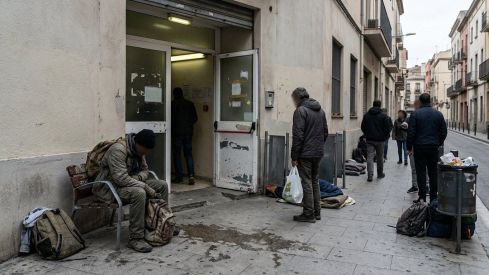
Cruz Roja attended to 583 homeless people in the regions of Girona in 2025, a figure that reflects the sustained increase in residential exclusion in the demarcation and that, according to the entity, has doubled in the last decade.
The organization attributes this increase, above all, to the arrival to this situation of former foster youth and poor workers who, despite having income, cannot afford the cost of housing due to the rising rents. The pressure is no longer concentrated only in Girona city, but extends to other municipalities in the demarcation.
A situation that extends and strains the care network
Marta Molist, head of the Employment and Extreme Vulnerability Area of Cruz Roja Girona, warns that this reality is becoming "chronic" in the demarcation and in the city of Girona. The head adds that the increase in homeless people "causes a collapse of available resources".
"Before there were municipalities that had one or two people in these circumstances and they themselves resolved it and now we find that they contact us for us to help them because of the number of homeless people they have, when before they had never done it" - Marta Molist, Cruz Roja Girona
The entity maintains that the current network does not respond to all demand. Molist recognizes that more resources are needed and emphasizes that only with the La Sopa Welcome Center of Girona is not enough to absorb the current volume of cases.
Without economic aid nor own homes to respond
Natàlia Villas, technician from Cruz Roja, specifies that the organization does not have resources to grant direct economic aid nor does it have housing to accommodate these people. That limitation complicates the intervention in a context marked by the lack of affordable housing supply.
In Girona city, the City Council keeps beds available in the old Uned for homeless people until the end of April. The measure serves as a temporary resource, although the pressure on care services continues to grow in parallel with the increase in people who cannot access or maintain a home.
The scenario, in the opinion of the professionals working on the ground, leaves an increasingly established trend in the Girona regions, with more affected profiles and with town councils asking for support in the face of a reality that a few years ago was much more specific.