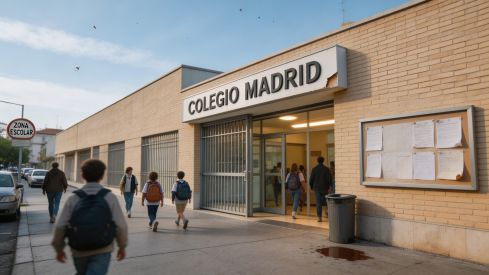
The ranking of the 100 best schools in Spain in 2026 places Catalonia as the third community with the most centers included, with 9, only behind Madrid, which totals 37, and the Valencian Community, with 11. No public school appears on the list.
Of the nine selected Catalan centers, eight are in Barcelona and one in Girona. Of the state total, nine schools are subsidized.
How the classification is distributed by communities
Madrid heads the list by number of centers present, with 37. The Valencian Community occupies the second position with 11. Catalonia remains in third place with 9 schools.
The Catalan distribution concentrates practically all its presence in the demarcation of Barcelona, while Girona contributes a single center to the classification.
The criteria that have been used to elaborate the list
The publication points out that a committee of professionals with pedagogical, psychological, and educational profiles has established 36 objective criteria organized into 7 blocks to rank the 100 best national and international schools in Spain.
The first block represents 30% of the total score. It includes the number of students per class, the student-to-teacher ratio, attention to student needs, accessibility for special needs, electives and reinforcement, support teachers, and the percentage of students who complete their entire school stage at the center.
The second block weighs 23% and analyzes the average grade in the university entrance exams, in addition to the final grades of Primary and Secondary.
The third block totals 18% and reviews the languages taught, the virtual classroom and hardware systems, the Baccalaureate options, and the non-academic or extracurricular activities.
The fourth section has a weight of 12% and evaluates the infrastructures, transports, and medical services or other resources of the center.
The fifth block reaches 10%. In this section, tutoring, diversity, the existence of a psychology space, training on rights and safety against sexual offenses, and also cybersecurity classes and services are valued.
The sixth block represents 5% and takes into account the monthly fee, the waiting list, the percentage of former students who take their children to the same center, and the presence of well-known alumni.
The seventh and last block weighs 2% and examines if finance classes are taught, if the center is secular or not, and if the uniform is mandatory.
Languages and profile of the selected centers
The majority of the schools included in the list offer German, French or Chinese as additional languages, in addition to English, Castilian and, depending on each community, Catalan, Galician, Basque or Valencian.
The ranking does not include any public school, a fact that marks the profile of this year's selection.
Some known alumni of centers present in the ranking
Among the cited former students are King Felipe VI, the Princess of Asturias Leonor de Borbón and the Infanta Sofía de Borbón, who studied at the Santa María de los Rosales School, in Madrid.
Also featured are Miguel Bosé, former student of the Lycée Français de Madrid, Pablo Alborán, of the Lycée Français de Málaga, Marcos Llorente, of the Logos International School of Madrid, and Carlos Sainz, who studied at Retamar, also in Madrid.