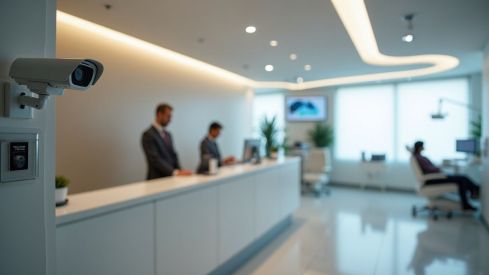
A Spanish dental clinic has been fined after installing two video surveillance cameras on its premises, one of which was capable of also recording audio in the examination room. The Spanish Data Protection Agency has imposed a financial penalty after a former employee reported the capture and use of images and sound without the adequate consent of clients.
Complaint after dismissal and review of video surveillance
The case began as a result of the unfair dismissal of a female employee. The former employee informed the competent authority that clients were not being notified that they could be recorded during dental procedures. According to the complaint, the clinic had two recording devices: one in the reception area and another in the treatment room where procedures were performed.
The clinic's management provided photographs of the sign indicating the video-surveilled area and argued that both cameras served a deterrent and security purpose. Only the one installed in the office captured audio. Access to the recordings was exclusively through a mobile application protected by a password and facial recognition, with no visible monitors for either the public or authorized personnel.
Agency Detects Breach of Minimization Principle
The Spanish Data Protection Agency concluded that the camera located in the cabinet recorded images during treatments in the dental operating room. Furthermore, it registered the sound of conversations between patients and healthcare professionals, storing this data for 7 days.
The organization considers that this practice does not comply with the principle of minimization, which requires limiting the processing of personal data to what is strictly necessary in relation to the intended purposes
"The camera installed in the cabinet would include the recording of images during patient treatment in the operating room" - Spanish Data Protection Agency
Economic Sanction and Corrective Measures
The fine imposed on the dental clinic amounted to 2,000 euros. However, the company finally paid 1,200 euros after benefiting from reductions for acknowledging responsibility and voluntary payment.
The clinic will have to reorient the camera to prevent it from continuously capturing the image and sound in the medical office area. If this is not possible, the device will have to be removed entirely
Audio and video recording in healthcare settings remains under special scrutiny by the authorities, who insist on the need to adequately inform users and limit data collection to what is essential.