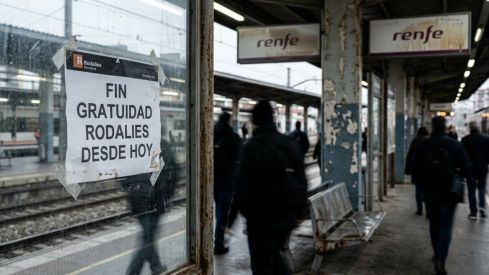
The gratuity of the Rodalies service in Catalonia ends this Saturday. The measure remains in place after more than three months of monthly extensions agreed upon by the central executive.
The government considers that the tariff exemption is no longer necessary to stabilize demand. The authorities assure that the network has recovered 90% of the usual ridership registered before the incidents that paralyzed the railway system at the beginning of the year.
A fatal accident in Gelida triggers the crisis
The emergency situation began on January 20 with an accident of a train on line R4 near Gelida. The event caused the death of a trainee driver and left about forty people injured, five of them in serious condition.
Two days before the accident in the Baix Llobregat region, the derailment of a high-speed train in Adamuz (Córdoba) had caused 46 deaths. This context of perceived insecurity strained the relationship between users and infrastructure managers.
The Rodalies network remained stopped for almost three consecutive days. The drivers, called by the SEMAF union, carried out two days of strike to denounce the state of the infrastructure and the existing safety deficiencies.
The budget for urgent works exceeds 90 million euros intended for immediate repairs. Some of these interventions are still underway to guarantee the stability of the road.
Thousands of citizens demand infrastructure improvements
On February 7, thousands of people demonstrated in Barcelona, called by various citizen platforms. The participants demanded urgent improvements in the service and denounced the historical lack of administrative investment in the Catalan network.
Faced with the paralysis, the government, together with Renfe and Adif, created a crisis committee to evaluate the operational situation. Shuttle buses were set up to connect the affected municipalities and the metro service in Barcelona was reinforced to absorb part of the passenger traffic.
Traffic was progressively restored although with speed limitations on several critical stretches. Technicians identified priority works, such as those necessary in the Garraf tunnel, to avoid new incidents.
Speed restrictions have allowed service to be maintained while repairs are carried out. The gradual return to normality has coincided with the decision to end the period of free fares.