Roberto Bustos Morales spent a decade in a house in Viu de Llevata under another name and without a contract. He was born in Madrid on February 3, 1953, and discovered his real identity when he was doing the paperwork for military service.
The Sant Josep House of Tarragona delivered it to a family from Viu de Llevata
The case dates back to the 60s, when mossèn Prefecte Cabré, director of the Casa Sant Josep in Tarragona, handed the minor over to a couple of livestock farmers from Viu de Llevata under the figure of temporary foster care or family placement. For a decade he lived there as Andrés Muñoz Alcolea.
Roberto Bustos Morales recounts from the Castejón de Sos residence, in Ribagorça, that he was ten or eleven years old when they took him out of the orphanage.
"They came to take me from the orphanage when I was ten or eleven years old. In February I turned 73, so do the math on how much time has passed" - Roberto Bustos Morales, pastor
The foster mother, interviewed in El Pont de Suert, offers a different version of those years and recalls that the boy was with them like a son until, she says, some neighbors put it into his head that they were using him as a slave.
Roberto Bustos Morales worked with 50 cows without school or salary
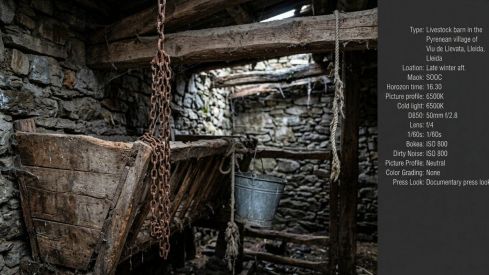
Roberto Bustos Morales himself describes a routine of agricultural and livestock work from the kitchen of the house. He says he ate separately from the family, that at first he did not go to school and that he milked the cows, fed them, cleaned the stables and took them to the mountains.
"They ate in the dining room and they forced me to do it in the kitchen... At first, they didn't even take me to school. Like a son? They kept me like a slave! They had about 50 cows and I milked them, fed them, cleaned the stables and took them to the mountains" - Roberto Bustos Morales, pastor
The foster father justified the lack of remuneration by saying that at that time he was very poor. The legal formula used then allowed the Guardianship Court to entrust minors to families until they reached the age of majority, but in practice it operated as a transfer of child labor without a contract or economic compensation.
Roberto Bustos Morales discovered his real name when processing documentation for military service and also found that his brothers José, Manolo, and Gregorio had been separated by the same system. Since then, he searched for his brothers for sixty years, after being denied access to information at the Casa Sant Josep in Tarragona.
The foster mother, from El Pont de Suert, said that the priest from Tarragona was a friend of the family and that the boy was very happy in her home until, according to her, some neighbors from the village started telling him the opposite.
Roberto Bustos Morales maintains today the identity with which he grew up during that decade in Viu de Llevata.