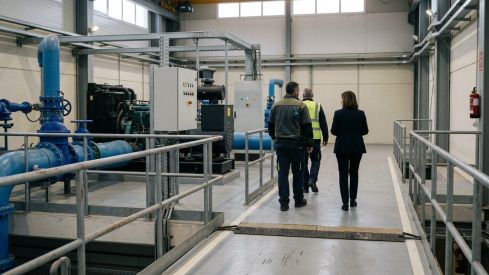
The Agència Catalana de l"Aigua has presented a plan to guarantee the continuity of essential water cycle services for at least 24 hours if an electrical blackout like last year's is repeated. The measure seeks to reinforce the system's response after that "electrical zero" of 12 hours that left some 400,000 users in the metropolitan area of Barcelona without water.
The minister Sílvia Paneque has framed the document as a direct response to an episode that, in her words, "marked a before and an after". The objective, she has said, is "not to be left unprotected again in a similar situation" and "guarantee essential services in any scenario".
More energy autonomy in critical facilities
The plan sets as a goal to ensure up to 72 hours of energy autonomy in the essential facilities of the ACA. It also contemplates guaranteeing the supply of fuel for the generators and deploying the Rescat emergency communications network to maintain coordination if the conventional network fails.
The roadmap covers all ACA centers and identifies essential activities, both internal and external. The analysis incorporates 47 risk categories and 163 possible causes. Based on that diagnosis, 15 scenarios have been prioritized and six specific action protocols have been defined, among them those linked to electrical failure or loss of communications.
The blackout evidenced the fragility of the system
Paneque has pointed out that last year's episode highlighted the strong dependence of the water cycle on the electricity supply, especially in pumping and distribution. In neighborhoods located at high elevations, the lack of electricity prevented pushing water towards the reservoirs or maintaining pressure in the network, which accelerated the depletion of available reserves.
The plan also states that, in some cases, the generator sets did not have sufficient autonomy or were not sized to cover the entire demand. It also notes that the lack of communications hindered coordination between operators in a general failure scenario.
Deposits, pressure and reinforcement of generators
Among the planned measures is the increase in storage capacity and the optimization of pressure management to extend the system's autonomy without depending on electricity. The ACA also proposes reinforcing alternative power supply systems with higher power generator sets and with fuel supply guarantees.
The document also incorporates energy self-generation projects and foresees ensuring redundancies in communications to sustain coordination between operators, the ACA, and the rest of the involved actors during a crisis.
Review of emergency plans
The agency urges operators to review their emergency plans, identify their energy needs and prioritize essential infrastructure. It also asks them to strengthen communication and coordination systems and advance in self-generation solutions to reduce dependence on the electricity grid when serious incidents occur.
The Govern links this plan to a "new culture of protection and self-protection" based on foresight in the face of crises that may affect basic services such as water. The initial budget reserves about 6.8 million euros for the installation of generator sets and associated tanks, a figure that may be adjusted based on the results of the energy audits that are still ongoing.