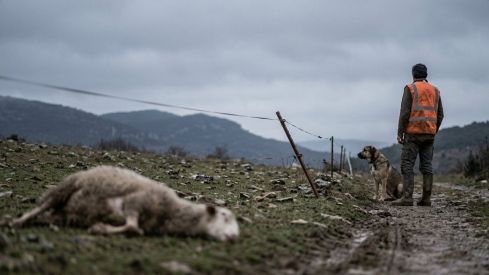
A lone wolf has attacked three flocks of sheep in Solsonès during the last few months. The incidents have been concentrated in La Molsosa and Vallmanya de Pinós.
These events represent the first records of predation by this species in the area since 2019. The provisional toll amounts to twelve sheep dead following the attacks.
Genetic analysis confirms a single aggressor
The autopsies performed on the deceased animals reveal a common pattern in the injuries. In all cases, the cattle had fangs lodged directly in the jugular vein.
The results of the DNA analysis of the biological remains found on the land point to a single conclusion. The same wolf specimen is responsible for the three registered attacks.
The confirmation that it is a solitary animal allows those affected to focus their efforts on specific measures. However, uncertainty about the possible arrival of more specimens persists among farm owners.
Livestock farmers reinforce night surveillance
The lack of preparation for this unexpected return has forced the modification of daily routines in the field. Owners have had to improvise defense systems to avoid further economic losses.
"We are not prepared" - Jaume Puigpelat, affected farmer
During the first weeks, human surveillance replaced automatic systems. Jaume Puigpelat explains that he and his father took turns each night watching the livestock while the other rested.
Currently, ranchers are organizing to protect their herds by installing electric fences. They have also incorporated security cameras and guard dogs into their facilities.
Puigpelat considers that they are in an initial phase of the conflict. He believes that with the use of mastiff dogs and constant vigilance they will be able to control the animal and avoid suffering more damage.
Despite these measures, the feeling of vulnerability remains. The rancher states that he feels defenseless and believes that the administrations have prioritized the protection of the wolf and the bear over that of the rancher.
The main concern lies in the demographic evolution of the predator. Puigpelat wonders what will happen if the wolf ends up forming a pack in the area.
The Pinós town hall shows optimism
The Generalitat de Catalunya and the Rural Agents have provided various preventive measures to those affected. However, the farmers consider that these aids are insufficient to guarantee the security of their businesses.
The mayor of Pinós, Xavier Vilalta, maintains a different stance regarding the management of the crisis. He assures that the local population should not suffer the consequences of the possible presence of the wolf.
"I am optimistic and I think it is under control" - Xavier Vilalta, mayor of Pinós
The council has worked to mitigate the economic impact on those affected. The livestock farmer from Vallmanya de Pinós has already collected the corresponding compensation for the losses that occurred.
In addition to economic compensation, this producer has received the requested protection measures. These actions seek to consolidate coexistence between livestock activity and wildlife in the territory.