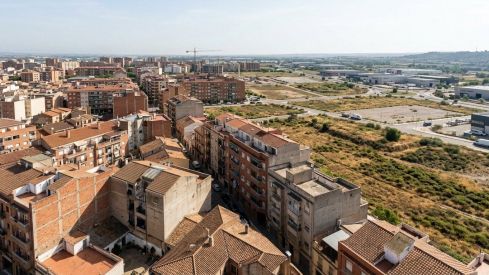
The document establishes an ambitious demographic objective for the coming years. The maximum estimates place the future population at 212,000 inhabitants. This figure represents an increase of almost 70,000 residents compared to the current census.
To house this new population, the planning foresees land to build up to 34,000 homes. The urban model opts for a compact city that fills empty spaces. Densification is prioritized over territorial dispersion.
"600 hectares of industrial land are reserved, concentrated in Torreblanca and in the surroundings of the El Segre industrial estate."
The planning also redefines the productive structure of the city. Industrial zones are strategically grouped to optimize land use. This concentration seeks to maintain economic competitiveness without invading residential areas.
The included facilities are the transfer of the prison, a future train stop at Onze de Setembre, and the new Fira venue. These infrastructures seek to improve connectivity and public services. The Turó de Gardeny environment appears as a key area for urban integration.
"The document will be made available for public information so that entities and individuals can submit observations or suggestions."
Now the legal text will be put on public display for a determined period. Citizens and organizations will be able to submit allegations before its final approval. This process guarantees transparency and social participation in the transformation of the city.