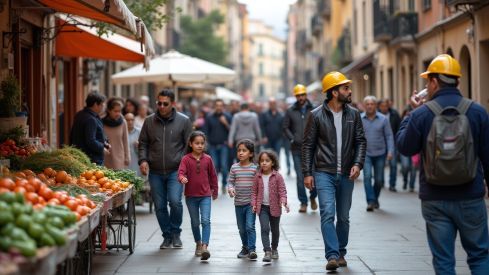
Girona has experienced sustained demographic and economic growth in recent decades, positioning itself today as one of the provinces with the greatest social diversity and integration challenges in Catalonia. GDP per capita has gone from €19,517 in the year 2000 to over €33,000 currently, while the population has increased from just over half a million inhabitants in 1991 to nearly 900,000 people.
Increase in Immigration and Social Transformation
Girona is currently the second province with the most non-EU immigration in the country, only behind Almería. This phenomenon has been linked to the demand for labor in key sectors such as agri-food, construction, transport, hospitality, tourism, elder care, and agricultural work. Most of these jobs require low qualifications and present difficulties in attracting the local population.
"To be able to carry out this growth, a human contingent has been needed to operate the key sectors of our economy, which are intensive in low-skilled labor, and which locals do not want to work in" - economic sector spokesperson
Pressure on Public Services and Inequalities
The arrival of new residents and economic globalization have made Girone's society more complex in social, economic, religious, linguistic, and cultural spheres. This process has placed increasing pressure on administrative services, especially in neighborhoods and municipalities where public investment has not kept pace with population growth.
"The arrival of these people (and of the economy in a globalized world) has also made society more complex socially, economically, religiously, linguistically, and culturally, and has placed significant pressure on the administration's services, where there has been no consistent investment" - social analyst
Currently, the province presents inequalities, ghettos, and barriers that affect coexistence and access to basic resources. Plurality and diversity should not translate into a more unjust society or a loss of Catalan identity.
"That today's Girona is plural, complex, and diverse should not mean that it is more unequal or unjust, nor that our language and identity cease to be Catalan" - local representative
Call to Political and Social Action
The current situation demands a decisive response from both citizens and policymakers. The implementation of social, educational, and cultural policies with determination is called for to face the challenges of integration and cohesion in Girona.
"It is necessary for citizens and politicians to be aware of the reality we have, to not dream of imaginary pasts, and, above all, to make determined efforts to implement social, educational, and cultural policies" - institutional spokesperson
The transformation of Girona in recent decades is a fact. The challenge now is to manage diversity and guarantee equal opportunities for all residents in the province.