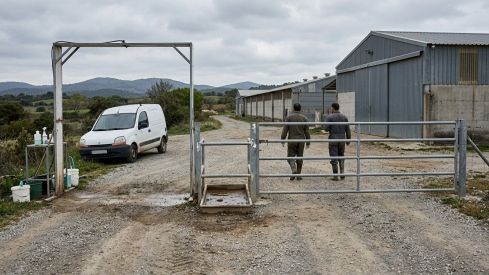
Catalonia keeps open the African swine fever crisis half a century after the extinction of the Borrassà outbreak, in Alt Empordà, whose end was commemorated last April 6. That outbreak was officially declared on February 20, 1976, and its extinction was set for March 25 of the same year.
The historical comparison comes at a time of special vigilance. The Generalitat places the start of the current crisis on November 28, 2025, when the Algete reference laboratory confirmed African swine fever infection in two wild boars found dead in Cerdanyola del Vallès. This is the first detection in Spain since November 1994.
41 foci notified and 238 positive wild boars
The latest official update, dated March 26, 2026, raises to 41 the outbreaks reported in Catalonia. In total, 238 positive wild boars have been confirmed spread across 10 municipalities, while 2,441 analyzed animals have tested negative.
The reinforced surveillance in 45 commercial farms has not detected, for now, any positive case in domestic swine. That monitoring is maintained as one of the main lines of control to prevent the jump of the disease to the farms.
Restrictions in the infected zone
The Generalitat's response includes restrictions on forestry activity within the infected zone. The measures limit access and mandate the disinfection of footwear, vehicles, and machinery, with the aim of reducing the risk of spread.
The impact also reaches foreign trade. Spain has lost its status as a country free of African swine fever before the World Organisation for Animal Health and, as a consequence, all export certificates that required that sanitary condition have been blocked in CEXGAN.
Girona, an especially attentive demarcation
The evolution of the disease is being followed with special attention in the Girona demarcation due to the weight of the pig sector. In 2024, the Girona pig census was 944,083 animals, a figure that represents 12% of the total for Catalonia.
That same year, Girona was also the province with the most internal movements of pigs in Catalonia, a fact that reinforces the importance of control and biosecurity measures while trying to contain a health crisis that has brought back to the forefront a disease eradicated from the country for more than three decades.