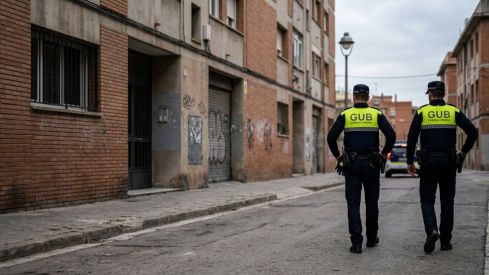
The Presidency and Security Commission of the Barcelona City Council has unanimously approved reinforcing the presence of the Guàrdia Urbana in the most conflictive areas of the city following the daylight shooting on Carrer de la Mineria, in Marina de Port.
The debate left a paradox at the center of the session. Jaume Collboni's government acknowledged that the problem goes beyond the municipal scope, but at the same time, all groups endorsed an immediate response in the area where the city council can act, with increased police presence on the street.
Batlle placed 90% of these crimes within the context of drug mafias
Albert Batlle, Deputy Mayor for Security, linked most incidents of this type to drug trafficking activity. In the commission, he stated that 90% of criminal acts of this type are related to drug mafias, an area that, he stressed, exceeds municipal competence.
Batlle also maintained that the growth of criminal gangs related to drugs does not only affect Barcelona. He framed it within an evolution that is also appearing in other cities in Catalonia, Spain, and the rest of Europe.
"Penalties for crimes against public health require a thorough review of the Penal Code" - Albert Batlle, Deputy Mayor for Security, Barcelona City Council
The approval came after the shooting on Carrer de la Mineria concentrated a large part of the political discussion. Marina de Port was thus positioned as one of the scenarios that have reopened pressure on the municipal security device.
All groups supported Junts per Catalunya's proposal
The initiative that moved forward originated from Junts per Catalunya and called for extraordinary measures to be applied in Barcelona. The text received the support of all municipal groups and also of Collboni's government.
Jordi Martí Galbis, councilor for Junts per Catalunya, described the moment as "a very serious situation that creates social alarm" and called for "promoting extraordinary measures." His proposal ended up becoming a unanimous agreement of the commission.
From the left-wing opposition, Marc Serra, from BComú, supported improving the GUB's presence in neighborhoods. Jordi Coronas, from ERC, introduced another nuance by warning that security is not just about more police and more control.
There were also direct criticisms of political management. Sonia Devesa, from the PP, lamented that the problem includes "the inability of political leaders," while Gonzalo de Oro, from Vox, asked the mayor to direct "belligerence against those who steal or kill."
The agreement, approved unanimously, thus combines two messages in the same session. On the one hand, it reinforces the presence of the Guàrdia Urbana in Barcelona's conflict zones, and on the other, it adopts Albert Batlle's thesis that a review of the Penal Code is necessary for offenses against public health.