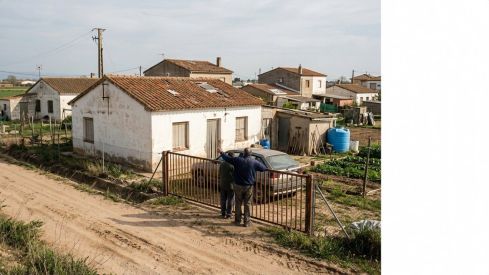
More than 1,700 homes in l'Horta de Lleida lack a valid urban planning license despite being inhabited and paying taxes. Residents demand a legal avenue to regularize these constructions given the impossibility of renovating or selling them at market price.
The situation affects approximately 3,100 properties spread across 52 rural districts. Current regulations only cover buildings prior to 1956 or those strictly linked to agricultural and livestock activities. The rest remain in a legal limbo that paralyzes any technical intervention.
The weight of irregularity surpasses the legal park
The data from the 2017 land use plan reveal the magnitude of the mismatch. Only 840 houses predate the law that classified the area as non-developable land. Illegal constructions far exceed legal ones and have certificates of occupancy despite their irregular status.
Francesc Montardit, president of the neighborhood commission of l'Horta, describes the conflict as a hot potato for all the administrations involved. He states that they have urged the Paeria to find a formula within the new municipal urban planning plan.
"We don't see a clear solution, but rather plans for already legal housing, and we hope a solution is found soon" - Francesc Montardit, president of the l'Horta neighborhood commission
Uncertainty blocks the improvement of existing heritage. Residents cannot obtain renovation licenses and see their asset lose value over time without a defined roadmap from the Generalitat de Catalunya.
Real estate devaluation reaches 50% of value
The economic consequences are immediate for the owners. Josep Maria Esteve, president of the college of real estate agents of Lleida, explains that banks finance only up to half of the appraised value in these cases.
This credit restriction sinks the sale price with respect to consolidated developments. Furthermore, some units are administratively classified as warehouses. In a case of compulsory purchase, the compensation would be calculated under that lower criterion and not as housing.
Lluís de la Fuente, president of the Lleida delegation of the Col·legi d'Arquitectes de Catalunya, confirms that they barely receive rehabilitation commissions in the area. The lack of a license prevents the execution of legal works and many structures are low-quality self-builds without prior technical supervision.
The architect warns about the risks of densifying this rural area. The introduction of new housing would require complex municipal services to install and would hinder the access of emergency vehicles, although he acknowledges the logic of agricultural buildings.
The political path has also shown its recent limits. The Junts parliamentary group presented allegations to decree-law 2/2025 to allow regularization through special plans. The proposal was rejected at the end of last year with the votes against from PSC, ERC, and Comuns.
The definitive regulatory text was published in the Official Gazette of the Generalitat on February 26, 2025, without including the modification requested by the opposition. The norm maintains the current restrictive framework for non-developable land.