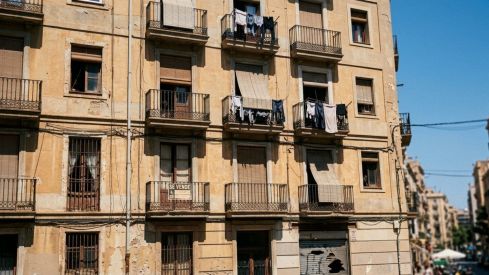
Isabel Rodríguez, minister of Housing and Urban Agenda, has backed the decision of the Barcelona City Council not to renew the 10,000 tourist apartment licenses when they expire in 2028. The head of the department considers this measure to be an example to follow for other cities with high tourist pressure.
Minister backs end of tourist licenses
Rodríguez points out that the Barcelona strategy could be extrapolated to cities like Málaga or Seville, as well as to areas of the Pyrenees with strong residential demand. However, he clarifies that this formula would not be valid for application throughout the national territory due to the structural differences of the real estate market.
The head of the central executive defends the need to intervene in the sector to prevent speculation from setting prices. Her stance aligns with the initiatives that the Generalitat is developing to regulate speculative housing purchases.
"It's about governing the market, not letting the market govern us" - Isabel Rodríguez, Minister of Housing and Urban Agenda
Despite recognizing the legal complexity surrounding these interventions, the minister highlights the rigor with which political groups and the Catalan government are addressing the issue. For Rodríguez, it is worth taking the step towards stricter regulation of holiday rentals.
Catalonia opts for 1.015 million until 2030
Beyond tourism regulation, the Spanish Government will prepare during the second half of May the Sectoral Conference on Housing. The objective is to approve the distribution criteria for the first tranche of 800 million euros within the state plan of 7,000 million aimed at alleviating the housing crisis.
The central executive is already working on the administrative mechanisms to transfer a first part of these funds starting in July. Isabel Rodríguez has expressed her expectation that Catalonia will be one of the first autonomous communities to sign the financing agreement.
The Catalan community will be able to receive around 120 million euros this year. In total, the region is eligible for an amount of 1.015 billion euros until 2030 to implement public housing policies and rent subsidies.
The minister also highlighted the public-social collaboration model promoted in Barcelona. This system allowed the acquisition of Casa Orsola, an emblematic building that became part of the city's social housing stock.