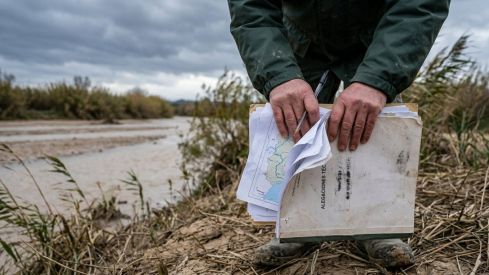
The Platform in Defense of the Ebro has submitted three allegations to the Scheme of Important Topics of the future Ebro River Basin Hydrological Plan 2027-2032, focusing on the final stretch of the river, the Siurana, sediment management, and the ecological flows of the Delta.
The entity places the main conflict in the sediments. After more than 15 years of studies, it maintains that the Ebro Hydrographic Confederation maintains an immobile position and warns that, if the document remains as it is, the delta will reach 2033 without material progress in sand mobilization.
The PDE warns that no sand will have been moved by 2033 if the plan remains the same
Susanna Abella, spokesperson for the PDE, criticized the lack of specificity in the pending pilot test in Riba-roja and also reproached the Generalitat de Catalunya for not pressing hard enough to unblock it.
"In these 15 or 16 years they have done many studies of studies that study, but we still haven't specified absolutely anything. They do studies of studies, without any clear proposal for sediment mobilization" - Susanna Abella, spokesperson, Platform in Defense of the Ebro
Abella added that the risk is not in a long-term technical discussion, but in the immediate calendar of the plan. The spokesperson maintained that by 2033 not a single grain of sand will have been moved if the current content ends up materializing without changes.
The allegations registered by the platform are concentrated on three interconnected fronts. They demand the recovery of the Siurana River, effective measures for sediment transport, and a review of the ecological flows in the final stretch of the Ebro.
The Delta lagoons demand their own flow and not to depend on irrigation
Another point that the entity considers a priority affects the lagoons and bays of the Delta. The PDE asks that spaces such as l'Encanyissada, la Tancada, or the Canal Vell have their own ecological flow, in line with state regulations and with rulings issued in other basins such as the Tajo.
Right now, these spaces depend on irrigation allocations. This link leaves them exposed during drought episodes and also to possible regulatory changes that alter water distribution.
Abella also rejected that the environmental guarantee of the lagoons comes at the expense of reducing water from the main channel. The spokesperson argued that the basin has sufficient resources to meet both needs without forcing a choice between the river and the wetlands.
"It is inadmissible that to ensure the ecological flows of the lagoons, the flow of the central axis of the river has to be reduced. The Ebro basin has enough water to guarantee both things" - Susanna Abella, spokesperson, Platform in Defense of the Ebro
Along these lines, the platform questions the proposal of the Taula de Consens del Delta to reduce the flow of the central axis of the river by 20%, from Xerta to the sea, between May and August during drought periods. The proposed cut would take it from 80 to 65 m³/s.
The new plan will enter its decisive phase at the end of the year
The document on which the PDE has registered its allegations corresponds to the second step of hydrological planning. The draft plan for the period 2027-2032 must be published at the end of the year and will open a new window to present allegations in May or June 2027.
The New Water Culture Foundation will hold its annual assembly on Saturday, June 6, in Terres de l'Ebre to commemorate the 25 years of the Platform in Defense of the Ebro.