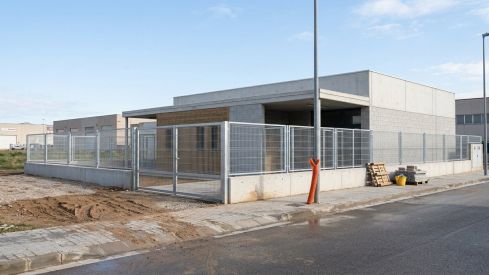
The works of the temporary reception space for feral cats of Reus face their final stretch and the City Council foresees that they will be finished in June. The facility is being built on Cervera street, in the Dyna industrial estate, with a budget of just over 200,000 euros.
The action is part of the municipal adaptation to Law 7/2023, of March 28, on the protection of animal rights and welfare. The center will have capacity to house up to 150 feral cats and will serve the approximately 80 feline colonies detected in the municipal area.
"We estimate that the completion of the works will reach June" - Daniel Rubio, regidor de Medi Ambient i Sostenibilitat de l'Ajuntament de Reus
Delay due to the weather
The company awarded the works is Oumeskur Construcciones y Obras SL. The initial schedule has been altered by the rains recorded in the first months of the year, a circumstance that has forced to extend the execution deadlines.
"They warned that due to meteorological causes they would be delayed and their contract was extended" - Daniel Rubio, councilor of Medi Ambient i Sostenibilitat of the Ajuntament de Reus
The future facility will have municipal management, although animal welfare organizations will be able to access through a digital entry and video surveillance system. The project also has the collaboration of 250 volunteers from Reus Gats and Nou Refugi Baix Camp, who participate in the care and monitoring of the colonies.
A center designed to apply the CER method
The facility has been designed to apply the CER method, based on the capture, sterilization and return or reinsertion of the animals, with the aim of controlling the evolution of feline colonies in the city. The City Council proposes this system as a tool to contain reproduction and organize care for feral cats.
"We have to fight, even if it is very difficult, to avoid the massive reproduction of cats in the city" - Daniel Rubio, councilor of Environment and Sustainability of the City Council of Reus
The building will be distributed into three blocks. One will be destined for veterinary and administration. Another will be a fenced and covered recreation yard. The third will include three reception kennels and a warehouse. With this infrastructure, Reus seeks to centralize the temporary care of animals and reinforce the control of colonies that are distributed throughout different points of the municipality.