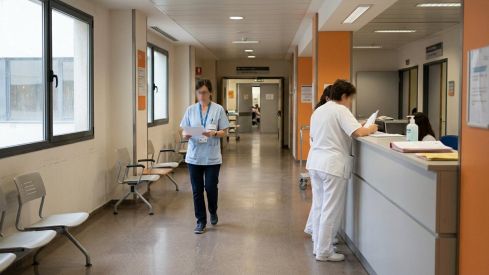
The Sant Joan de Reus Hospital has taken over the Disability Degree Assessment and Orientation Service and the Dependency Assessment Service for the regions of Baix Camp, Conca de Barberà, and Priorat. The incorporation integrates both public devices into the Intermediate Care Area of the Reus healthcare center.
With this step, the hospital centralizes the activity of two services that perform around 6,000 assessments per year on the degree of disability and dependency status. Their function is not limited to assessment, but also guides users towards the resources and benefits that best suit their needs.
Integration within the hospital's care area
The EVO and SEVAD teams have been incorporated into the structure of the Intermediate Care Area, where professionals from medicine, psychology, nursing, social work, occupational therapy, and administrative services will work. Both services are funded by the Department of Social Rights and Inclusion of the Generalitat.
The reference teams for Baix Camp, Conca de Barberà, and Priorat are located on the ground floor of the hospital, in the orange zone, within the outpatient care space of the Intermediate Care Area.
Assessments at the hospital and also at home
The organization of work will be different depending on the type of service. In the case of the EVO, the assessments will be carried out at the Hospital Sant Joan de Reus itself. The SEVAD, on the other hand, will travel to the user's home to directly know their environment and detect possible architectural barriers.
"In the case of the EVO, assessments are made at the hospital, while the SEVAD team travels to the user's home to learn firsthand about the environment and possible architectural barriers, thus ensuring an assessment adjusted to their daily reality" - Neus Rosich, coordinator of the teams
This model seeks to adjust the valuation to the daily situation of each person, especially in cases where the home context conditions autonomy and support needs.
A joint response to health and social needs
From the direction of the Intermediate Care Area, this incorporation is framed within more coordinated care between the health and social spheres, especially in situations related to aging and loss of autonomy.
"In aging, health and social problems go hand in hand, and it is evident that by working together we will be able to offer a more agile, complete and effective response" - Gabriel De Febrer, director of the Intermediate Care Area
The integration of EVO and SEVAD in the Reus hospital reinforces proximity care in three counties of Camp de Tarragona and concentrates in the same care setting the assessment, guidance, and support of people with disabilities or in situations of dependency.