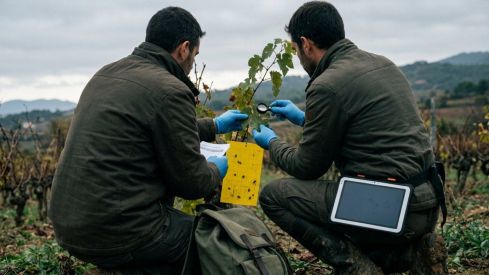
Catalonia has served as the setting for a state simulation exercise designed to reinforce preparedness for a possible detection of the quarantine pest Popillia japonica. The Department of Agriculture, Livestock, Fisheries and Food organized the event together with the Ministry of Agriculture, Fisheries and Food (MAPA).
The initiative brought together nearly 70 professionals from different autonomous communities. The central objective was to test the surveillance, notification, and diagnostic protocols in a controlled environment.
Technicians evaluate coordination between administrations
The exercise sought to improve coordination between the different administrations and intervention teams. During the day, technical activities and exchange spaces were carried out among specialists to share protocols and previous experiences.
From the Generalitat de Catalunya it is indicated that these exercises allow the detection of areas for improvement. The regional administration highlights that this practice strengthens operational capacity against threats with agricultural, environmental, and economic impact.
The concern about this insect lies in its rapid expansion. There is a high risk of dispersion through the transport of goods, vehicles, or plant material. The pest already has a confirmed presence in several points in Europe.
Catalonia reinforces surveillance due to its logistical condition
The administrations have reinforced the prevention and rapid response systems in Catalan territory. This decision responds to the strategic condition of the region, which concentrates ports, international airports, and high mobility of goods and people.
This alert for invasive species coincides with the expansion of the Asian hornet (vespa velutina) in Catalunya. This predator affects bees and local biodiversity. Furthermore, it generates social alarm due to the usual installation of nests in urban and natural areas.