Platja de l'Arrabassada beach, in Tarragona, will incorporate a system of sound and tactile beacons so that blind people can bathe with more autonomy and safety. The project, promoted by the Tarragona City Council, has been approved by the municipal plenary.
The action comes to a beach that already has accessible walkways, changing rooms, shaded areas, and amphibious chairs, but which until now did not have a specific orientation system in the water for visually impaired users. The intervention seeks to cover that part of the access to bathing that still depended to a greater extent on external accompaniment.
The beach will add four sound beacons within the bathing area
The plan foresees the placement of four localization beacons aligned in the bathing area. These signals will emit sounds that will serve as a spatial reference to guide users while they are in the water.
In addition, the installation will include tactile beacons with reliefs to warn of the presence of other bathers in the same area. The objective is for the user to be able to better identify their immediate surroundings while bathing.
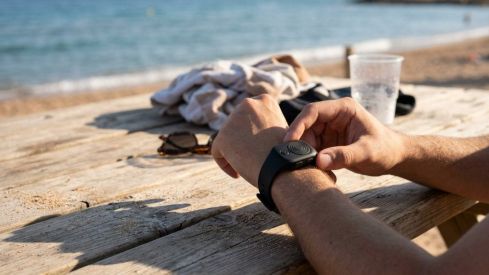
The system will work with connected wristbands worn by bathers. These devices will allow the signaling to be activated and also to contact the lifeguard service if they need assistance.
Two acoustic totems will explain the use of the system at Platja de l'Arrabassada
At the entrance to the service, two information totems with acoustic messages will be installed. These points will explain how the system works and where the beacons are located in the water.
Platja de l'Arrabassada beach already has several accessibility elements on the sand, including walkways, adapted changing rooms, shaded areas, and amphibious chairs. With the new intervention, the city council adds a tool specifically oriented towards the mobility and spatial reference of blind people in the bathing area.
The municipal plenary has given the green light to the action with a budget of 16,412 euros.