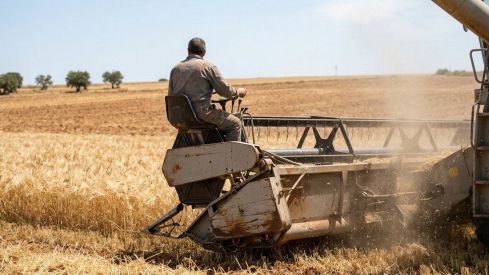
The cereal harvest campaign has already started in the regions of Ponent with the first work initiated last Wednesday in the dryland areas of Alfés. The farms have started with barley, while wheat and triticale are still in the maturation phase.
The start of the harvest comes with an unusual combination for the area's fields. Dryland yields are above 4,500 kilograms per hectare, favored by winter and spring rains, but the agricultural sector remains on alert due to the losses already caused by the rabbit plague in some fields.
Alfés opened the campaign with yields above 4,500 kilos per hectare
Josep Ignasi Molló, manager of the Cooperativa d'Alfés, assured that the dryland harvest is yielding figures similar to those of the past campaign. In his initial assessment, he specified that the yields are similar to last year's and exceed 4,500 kilograms per hectare.
"The yields are similar to last year's and are above 4,500 kilograms per hectare" - Josep Ignasi Molló, manager of the Cooperativa d'Alfés
In Alfés, about 2,500 hectares of cereal are cultivated. Daily harvesting is concentrated from mid-morning to avoid the humidity that can still affect the grain in the early hours of the day.
The rains recorded during winter and spring have favored the crop. Furthermore, the heat in April has not caused significant damage to the grain, a factor that has allowed the campaign to start with stable forecasts for dryland.
Irrigated land could reach 7,500 kilos per hectare if May heat takes its toll
The campaign will continue in the coming weeks, and irrigated land harvesting will not conclude until mid-July. For these plots, production forecasts range between 6,500 and 7,500 kilograms per hectare, with a higher outlook than for dryland.
However, the crop's performance on these farms will still depend on how the effect of May's heat on the grain evolves. This risk coexists with prices that, for now, remain around 200 euros per ton.
At the same time, part of the agricultural sector in Ponent has warned of losses in some fields due to the incidence of the rabbit plague, a problem that coincides with the start of a campaign that in Alfés covers around 2,500 hectares of cereal.