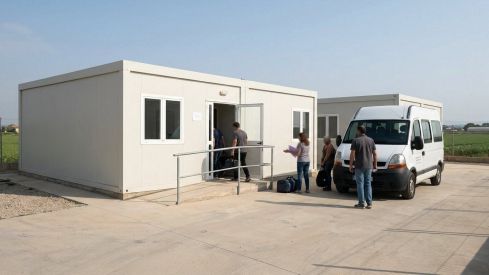
The Seròs hostel opens its doors this Monday to host seasonal workers who arrive in the area with the aim of joining the agricultural campaign. The initiative seeks to provide an immediate response to the accommodation needs of people in vulnerable situations during the months of greatest labor activity in the field.
The private facility has 40 places spread across two modules fully equipped to guarantee decent living conditions. This resource will remain operational uninterruptedly until the end of September, thus extending the period of activity compared to the previous year.
A stay limited to ten days
The service complements the device enabled by the Lleida City Council in pavilion 3 of the Lleida Fair, which covers the central months of the season. People referred to Seròs will be able to stay at the hostel for a maximum period of ten days.
The single office for the attention of temporary workers of the Lleida council will be in charge of managing referrals to this new space. A transport service organized by the Comarcal Council will move users from Lleida to the municipality of Seròs.
"The expansion responds to the good functioning of the device the first year" - Núria Gil, Government delegate in Lleida
The human team that will assist the seasonal workers is made up of three professionals hired by the Servei d'Ocupació de Catalunya. An educator, a social integrator, and a social worker will provide direct support to the residents during their stay.
Public funding and shared management
The Generalitat assumes the main financing through the program contract regarding temporary accommodation. The Provincial Council of Lleida will also contribute economically to the maintenance of the device, while the stay will be totally free for users.
During the past season, the shelter registered 189 overnight stays corresponding to 36 users. That experience was chronologically limited to the months of May and September, compared to the continuity offered by the new opening now.
The implementation of this resource reinforces the existing reception network in the Terres de Lleida to face peaks in agricultural labor demand. Coordination between administrations allows for the optimization of available spaces and ensures that no worker is left without shelter during their workday.