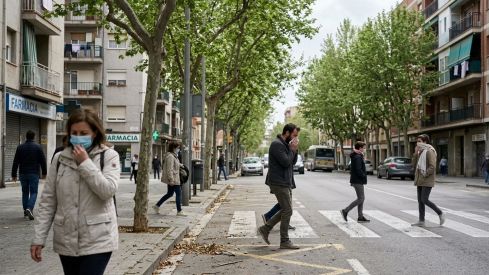
Lleida appears this spring among the most affected areas of Catalonia by the increase in most types of pollen, in a context marked by an especially rainy winter and by the rise in temperatures, which has favored the proliferation of plants and has advanced pollination cycles.
The data point to a particularly intense situation in the Lleida demarcation, where cypress, plane tree, olive, and ash pollens show upward trends. Added to this is that the winter pollinations of cypress, hazel, ash, and parietaria began in February and registered levels above the historical averages for the period 1994 to 2025.
A more intense and longer spring
The forecast for the whole of Catalonia is for a spring with high pollen concentrations and a longer season than usual. Specialists also warn of a cumulative effect between different types of pollen and pollution, a factor that can intensify symptoms in allergic people.
The herbs with greater allergenic capacity, such as parietaria, grasses and lesser plantain, could remain active until July. That scenario prolongs exposure for several more weeks compared to less intense campaigns.
Across Spain, experts estimate that the pollen season could extend by 19% this year. They also predict that the annual concentration will increase between 16% and 40%.
Impact on health
According to available data, about two million people suffer from respiratory allergies in Catalonia. Rhinitis is present in 25% of the population and allergic asthma affects 12%.
Allergies especially affect children and adults between 35 and 40 years old. Specialists warn that these diseases are increasing and emphasize that climate change and pollution worsen the problem.
Recommendations to reduce exposure
Among the recommended preventive measures is ventilating homes first thing in the morning or at night. It is also advised to avoid outdoor activities during the hours of maximum pollen concentration, at noon and in the afternoon.
Experts also recommend protecting oneself from environmental pollution, as its combination with pollen can worsen the respiratory response and increase discomfort during spring.