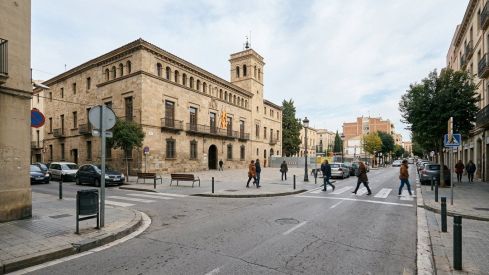
The plenary session of the Lleida City Council has initially approved the new Municipal Urban Planning Plan (POUM), a decision that will mark the future of the city and define the urban planning roadmap for the next twenty years. This agreement opens the door to significant transformations that aim to adapt the capital of the Segrià to current and future needs, with a special focus on housing and economic development.
One of the main axes of the new document is the construction of up to 34,000 new homes. The proposal includes a significant portion of this amount exclusively for affordable housing, seeking to guarantee access to housing for different profiles of residents. The strategy proposes balanced growth throughout the city, avoiding disproportionate concentrations and fostering territorial cohesion.
Transformation of neighborhoods and key spaces
The planned actions cover multiple urban areas. The improvement of the Historic Center and the Mariola neighborhood is contemplated, key spaces that will gain prominence in the new urban distribution. Likewise, projects such as the reorganization of Gardeny and the expansion of the Champs-Élysées are proposed, interventions that seek to modernize infrastructures and improve quality of life. The creation of new green spaces and the improvement of connections between neighborhoods complete this set of actions aimed at making the city more sustainable and connected.
The productive fabric is also reinforced by the expansion of industrial land. This measure aims to facilitate the establishment of new companies and generate economic activity, a key factor for Lleida's dynamism in the coming decades.
Next steps and citizen debate
After this first political phase, a 45-day public information period begins. During this time, residents will be able to submit their objections to the document, participating directly in the configuration of their environment. The Paeria will organize several information sessions to clarify doubts and explain the plan's contents in detail. Once the citizen contributions have been collected, the document will have to return to the plenary for provisional approval, a mandatory prior step to be able to definitively validate it by the Generalitat de Catalunya.
The debate surrounding the new plan has not been without political tensions. While there is widespread consensus on the imperative need to update urban planning that until now was governed by a document from decades ago, some political groups have expressed reservations. The objections focus mainly on the proposed growth model and the citizen participation mechanisms, questioning whether sufficient transparency is guaranteed in the process.
Now we have to wait for the result of the public debate to see how the measures evolve before closing a chapter that will transform the map of Lleida for generations.