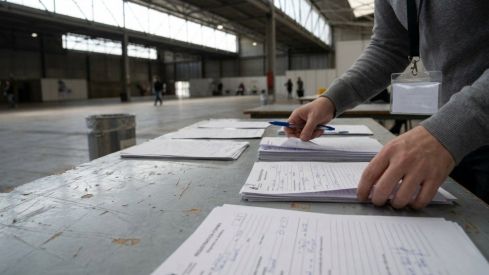
People arriving in Lleida for the fruit campaign and finding work in l'Horta will have priority for accommodation in municipal resources activated this summer. The operation begins this Wednesday with pavilion 3 of Fira de Lleida as the reception center and with a network of apartments and emergency spaces to refer those who find employment.
The plan is being launched in a different context than in previous campaigns. The city council maintains that fewer people have arrived this year than in other years, but at the same time reserves stable accommodation for those who secure a contract through the device itself, with the aim of reducing the presence of seasonal workers sleeping on the street.
Pavilion 3 will be open until August 31 with 100 places and seven-day stays
Pavilion 3 of Fira de Lleida will function as a reception center with capacity for 100 people from this Wednesday until August 31. The facility will offer a dining room, laundry, storage, and showers, and the maximum stay will be seven days.
Until the 12th, the single point of contact office will be located at Mercolleida. From that date, it will move to pavilion 3 to concentrate the initial reception and subsequent referral to other resources there.
The municipal operation also adds 16 apartments with capacity for 90 people, the Caparrella Seasonal Worker Care Center with 32 places, and the Seròs hostel with 40. A dozen people have already been referred to this latter resource.
In the municipal apartments and at CAT1, the daily cost of accommodation will be five euros. The first referrals to the Caparrella center will arrive in groups within a few weeks.
The city council will prioritize those working in l'Horta with a valid contract
Carlos Enjuanes, deputy mayor for Social Action and Innovation, explained that the access criteria for municipal accommodation seeks to link the stay to employment in the agricultural campaign.
"Those who work in l'Horta and have found employment through our device will be a high priority because we want to minimize the street impact of these people, who will be able to stay there as long as they have a valid contract" - Carlos Enjuanes, deputy mayor for Social Action and Innovation, Lleida City Council
The council frames this year's campaign within a lower arrival of people. In the spring of 2025, about thirty arrived who needed attention, and during May the figures were similar, without episodes of massive arrivals.
Enjuanes also linked this forecast to the extraordinary regularization of migrants. The deputy mayor indicated that he does not expect more arrivals than in other years, although he does expect a different situation because some of the people who previously needed social coverage could now access labor coverage.
"Last year, 400 of the thousand people attended by the device did not have papers, and this year we expect that some or all of these will have this permit so that we do not have to give them social coverage, but labor coverage" - Carlos Enjuanes, deputy mayor of Social Action and Innovation, Lleida City Council
Enjuanes proposes reducing the pavilion if Lleida gains more stable places
The city council foresees at least two new Seasonal Worker Care Centers for future campaigns. The idea is to keep pavilion 3 as an initial reception point and then refer them to smaller spaces.
Enjuanes argued that the pavilion covers the first week of stay and will continue to be useful as an initial filter. At the same time, he proposed reducing its capacity if the city incorporates more permanent resources to house temporary workers in better conditions.
The deputy mayor specified that objective with a figure. He suggested that the pavilion could be reduced to between 20 and 30 places if the city manages to assist or refer fewer people and has more adequate spaces to house them.