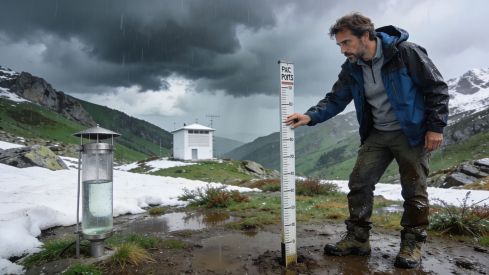
The Meteorological Service of Catalonia has confirmed that the months of December, January, and February have been the rainiest in the last 30 years across Catalonia. The situation has affected the entire territory, with historical records in different points and episodes of persistent rains, snowfalls, and intense winds.
Historical records in key observatories
At the Observatori de l'Ebre, the third rainiest winter in a 121-year series has been documented. The Observatori Fabra in Barcelona has corroborated that this winter period has been the fifth rainiest in the last 113 years in the city. The last time a similar situation was experienced in Catalonia was in the winter of 1995-1996.
The precipitations have been especially persistent. Experts highlight the frequency and intensity of the episodes of torrential rains and the continuity of the fronts associated with trains of storms.
"This past season not only stands out for several episodes of torrential rains but, above all, for the persistence of the precipitations derived from the trains of storms that have crossed the territory" - Experts, Servei Meteorològic de Catalunya
Impact in different regions and record accumulations
- In the Ports Natural Park (Baix Ebre), up to 657 liters per square meter have accumulated.
- In the Darnius-Boadella reservoir (Alt Empordà), 591 mm of precipitation have been recorded.
- At the Puig Sesolles station (Vallès Oriental), nearly 583 mm have been reached.
Between Christmas and Epiphany, several fronts left snowfalls at low altitudes and torrential rains with accumulations of up to 200 liters per square meter in different places. At the Núria (Ripollès) meteorological station, 144 centimeters of snow have been recorded, the highest figure in the observatory's 26-year history. Episodes of snowfall have occurred a few meters from the sea, especially on the eve of Epiphany.
Wind storm and rain warnings
In February, storm Nils caused a wind storm with hurricane-force gusts of more than 100 km/h on the central coast and pre-coastal area. Catalonia has received the impact of about fifteen storms between December and February, which have caused floods, torrential rains and episodes of violent weather.
- Between autumn and winter, more than fifty days with rain warnings have been registered.
- At least in a dozen of those days, red level warnings were issued for torrential rains.
Elevated temperatures and climate change
Analyses indicate that temperatures in Catalonia have been above normal during this winter. This behavior is explained, according to Meteocat, by the elevated nighttime temperatures, which have been above average for much of the season, with few specific interruptions at the beginning of winter and during the Christmas period.
"This thermal behavior is explained by the high nighttime temperatures, which have been above average during much of the season, with few specific interruptions at the beginning of winter and during the Christmas period" - Spokesperson, Meteocat
Various analyses suggest that climate change has fueled the formation of the train of storms in recent months and has increased the amount of water discharged in several episodes. The increase in air and sea temperatures has favored the formation of storms and the appearance of hurricane-force winds in Catalonia.