The Girona City Council has opened a participatory process in May to decide new uses for the Torre de Taialà track, closed since 2022 by judicial order after a neighbor's complaint about noise. The debate begins in the same neighborhood, where the council seeks a solution for a facility that ceased to function due to a coexistence conflict.
The tension of the process lies at that point. The municipal government wants to recover a space rooted in Torre de Taialà, but must do so after a closure ordered by the justice system and with the obligation to make community activity and neighborly rest compatible.
Girona calls three sessions in May to redefine the track closed since 2022
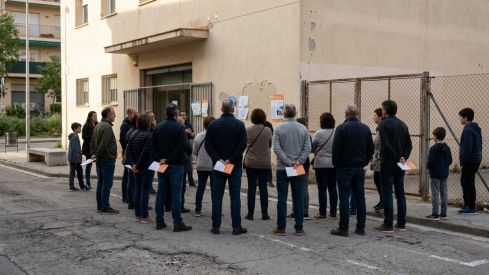
The open sessions will be held on Friday, May 15 and 22, and Thursday, May 28, between 6:00 PM and 8:00 PM, in front of the Torre de Taialà Social Center. The meeting point will be number 45 on Carrer de la Torre de Taialà.
The City Council has proposed a first phase of work to collect ideas and organize proposals before moving the meetings to the track itself. There, options that have emerged from the previous process will be evaluated on-site.
The Centre Cívic Ter will facilitate the sessions. The format will include collecting contributions, an open turn to speak, a specific activity for children to express their opinions, and a final vote on the best-rated initiatives.
The municipal government wants to open social and family uses without repeating the noise conflict
Núria Riquelme, deputy mayor and councilor for Service to People and Catalan Language, defended the opening of the process with an appeal to neighborhood participation.
"It is important to listen to the citizens and generate spaces for participation to jointly debate the future of facilities in the neighborhoods" - Núria Riquelme, deputy mayor and councilor for Service to People and Catalan Language, Girona City Council
Riquelme added that sharing proposals can help identify applicable options in the future to promote coexistence and community use of the space. The municipal approach involves redefining the facility without losing sight of the origin of the closure.
Gemma Martínez, councilor of City that Cares and of the neighborhood, maintained that the municipal government wants to recover a space highly valued and rooted in Torre de Taialà with the participation of the neighbors. She also pointed out that the local executive's will is for the court to function again as a meeting place.
"This participatory process is an opportunity to rethink together the future uses of the space, making community activity compatible with respect for coexistence" - Gemma Martínez, councilor of City that Cares and of the neighborhood, Girona City Council
The councilor framed that reopening in social and family uses and linked it to the idea of reinforcing the neighborhood's neighborly ties. The court, closed two years ago by a judicial resolution, will enter a second phase of debate when the sessions leave the social center environment and move to the venue itself.
The last of the three open calls is set for Thursday, May 28, from 6:00 PM to 8:00 PM, in front of the Torre de Taialà Social Center, at number 45 Torre de Taialà street.