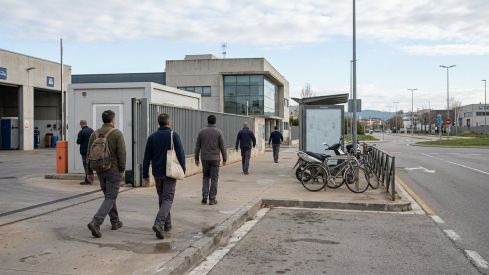
The increase in residents has been one of the drivers of economic growth in Spain in recent years and also leaves its mark on the regions of Girona. Between March of last year and March of this year, the territory added almost 7,200 workers, of whom more than 2,300 were foreigners, 32% of the total.
The weight of this incorporation of population and labor is framed within a broader trend. The Banco de España places at almost a third the contribution of the increase in residents to the economic growth registered in the whole of the State between 2022 and 2024. BBVA Research raises that contribution to almost 40%.
Fewer work permits in the province
In the province of Girona, during the last year 4,152 work permits were issued. The figure represents a decrease of 29.1% compared to 2024, when 6,053 authorizations were registered.
By nationalities, Marruecos headed the number of permits granted, with 984. Next were Honduras with 756 and Colombia with 411. Also figure Rusia with 239, Perú with 141, Senegal with 137, India with 131, Gambia with 119, Argentina with 89 and Estados Unidos with 80.
Male predominance and concentration in central working ages
The majority profile of the new non-EU workers authorized in Girona was male. 61.71% were men and 38.29% women. The age range with the most authorizations was 25 to 34 years, with 1,629 cases.
Behind was situated the group of 35 to 44 years old, with 1,274 authorizations, followed by those over 44 years old, with 890, and the young people aged 16 to 24 years old, with 359.
The majority enters as salaried
Regarding the employment situation, 64.79% of migrant workers who obtained authorization did so as employees. 0.79% accessed as self-employed and 34.42% combined an activity as an employee with another as self-employed.
The data reflect that the incorporation of foreign population into the Girona labor market maintains a relevant weight in the recent evolution of employment, although the volume of new authorizations has fallen sharply compared to the previous year.