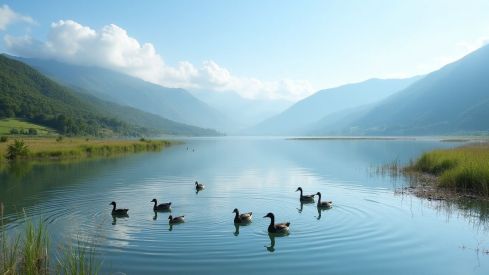
The Darnius-Boadella reservoir, in Alt Empordà, has exceeded 97% of its capacity this Monday, reaching 61,832 cubic hectometers, according to official data collected at midday. This volume places the reservoir at its highest level since January 2020, just after the Gloria storm and before the start of the pandemic
Historic Recovery of Water Levels
Last Thursday, the reservoir had already reached 92.5%. During the last flood, the figure reached 90.66%. Just a few days ago, the reservoir did not exceed 85%. The contrast is significant when compared to March 2025, when the reservoir contained only 11% of its capacity.
Water levels in Darnius-Boadella are recovering after months of severe restrictions in the region. The Alt Empordà was one of the areas most affected by the water crisis, with limitations on water use that were not lifted until last spring.
Reservoir Management and Regulation
In recent weeks, the competent authority has increased water discharge to regulate volumes and allow the reservoir to handle the flow from the headwaters of the Muga and Arnera rivers. This measure seeks to prevent overload situations and ensure the safety of the infrastructure.
The images illustrating the current situation were taken this Monday at 9 a.m. and sent by reader Josep Gutiérrez.
Impact on the Estanys de la Jonquera
The water recovery is also reflected in the Estanys de la Jonquera. Just over a year ago, these small ponds and wetlands located at the foot of the l'Albera massif were completely dry. Now, according to residents, they present an appearance not seen in two decades.
"We haven't seen the Estanys like this in twenty years" - Resident, La Jonquera
The Estanys de la Jonquera form a set of humid meadows and peatland areas fed by groundwater, located on Quaternary materials at the southern end of the massif. The change in their state evidences the extent of the hydrological recovery in the area.