The Bogotá Security Secretariat has issued an alert due to the surge in digital scams through text messages, a modality that seeks to impersonate traffic authorities to capture users' personal and banking data. The warning comes after detecting an increase in reports in Bogotá and in municipalities of the Sabana during the first quarter of 2026.
The method detected is known as smishing. Cybercriminals send SMS messages that appear to come from official bodies and warn about alleged traffic fines in the legal collection phase, with references to possible asset seizures. The objective is to push the recipient to click on a fraudulent link.
Those messages usually include promises of discounts for immediate payment. Once inside, the victim accesses fake portals that imitate the image of official pages and where they are asked for personal data, account numbers or bank card information.
Notice about fake links and payments
The Secretariat of Mobility and Simit have reminded that they never notify of seizures nor claim urgent payments by text message or through unofficial links. From the Secretariat of Security, they have also insisted that no state entity requests personal information or payments through links sent by SMS.
The authorities emphasize that legal procedures are always communicated through formal channels and not through informal messages. The recommendation is not to open links, not to provide data, and to check any notification exclusively on authorized portals.
Another scam with signs on the windshields
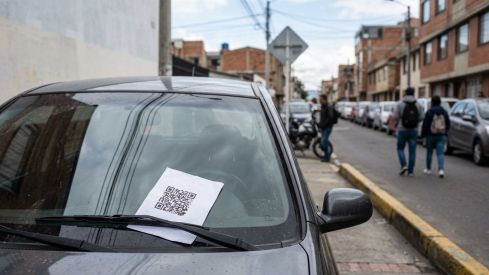
The alert also extends to another modality detected in the Colombian capital. It is about fake posters placed on vehicle windshields that simulate penalties for bad parking. In those notices, a QR code appears that, when scanned, redirects to a fraudulent website.
On that site, personal and banking data are requested or, in some cases, the installation of malicious software on the driver's device is facilitated. The District Secretariat of Mobility has made it clear that it never uses papers adhered to cars nor QR codes to communicate sanctions.
"If you find a QR code on your car, do not scan it and do not enter any personal data. These notifications are completely false" - Secretariat of Mobility
The same entity reminds that all official notifications are processed through authorized channels such as Simit or the institutional page.
More than 7,500 cases reported in 2025
Official figures reflect the dimension of the problem. In 2025, 7,584 cases of digital fraud were reported in Bogotá. In the first three months of 2026, 168 complaints have already been recorded.
To report these facts, citizens can file a complaint with the Virtual CAI or through the Comprehensive Complaint Assistance Program, Aide, of the Secretariat of Security. The enabled telephone channel is (601) 377 95 95, option 5, extension 1137. In cases related to QR codes on vehicles, lines 123, 165 of Gaula, and 112 are also available.
The authorities maintain surveillance over these practices and urge extreme caution before any message or notice that claims urgent payments, threatens with seizures, or redirects to links external to the official channels.