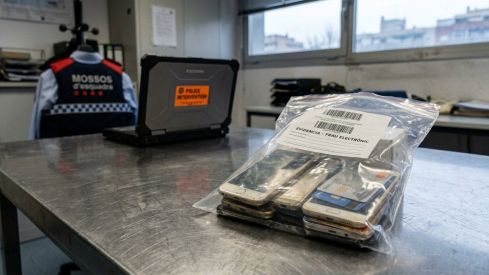
The Mossos d'Esquadra have arrested two men, aged 19 and 25, in Barcelona for their alleged involvement in a scam ring that allegedly moved 14,600 euros with stolen mobile phones and bank cards in the city. Both have now been brought before the judicial authorities.
The investigation points to a scheme that was not limited to the occasional use of a stolen card. The suspects accessed the victims' online banking with the stolen devices, documentation, and cards to order transfers, make bizums, activate virtual cards, request immediate loans, and make purchases online.
The ring bought stolen mobile phones and used mules to move the money
According to the investigation, the main suspects acquired stolen phones from a group of regular thieves in exchange for a percentage of the profits obtained later with the banking operations.
To withdraw the money and divert transfers, they resorted to intermediaries, the so-called mules, with the aim of concealing the real identity of those who directed the operation. This use of third parties fit into a circuit that combined device theft, account access, and money reception in other bank accounts.
In the searches carried out at the homes of the two arrested individuals, officers seized laptops, SIM cards, high-end watches, and cash. The material was incorporated into the case opened for the investigated scams.
A previous arrest placed a collaborator in charge of managing accounts and recipients
This is not the first police action related to this group. On February 4, the Mossos d'Esquadra had already arrested another 25-year-old man for creating and activating the bank accounts that received the stolen money.
Investigators attribute to him a supporting role to the alleged main perpetrator and the management of the mules involved in the money movements. In a recent case of digital fraud in the city, mule accounts in online scams reappeared as a key element to hinder tracking.
The case remains open and the Mossos d'Esquadra do not rule out further arrests within the same ring. The closest precedent to the investigation dates back to February 4, when the alleged manager of the bank accounts receiving the stolen money was arrested.