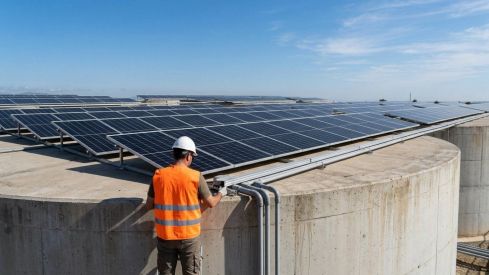
TAIGUA has installed 1,133 photovoltaic modules at the Can Boada and Can Poal reservoirs in Terrassa, with the aim of covering the electricity consumption of both facilities linked to water supply with its own generation. The project involved an investment of 260,000 euros, financed 50% with European funds managed through PERTE.
The installation, however, introduces two different scales within the same project. While Can Poal will cover its entire annual consumption and have a surplus of 22%, Can Boada, despite concentrating 713 panels and a power exceeding 300 kW, will cover 18% of the annual consumption of a facility that supplies two-thirds of the city.
Can Boada concentrates 713 panels and exceeds 300 kW of power
At the Can Boada reservoir, TAIGUA has installed 713 panels over a surface area of 1,484 square meters. The installation exceeds 300 kW of power and will cover part of the energy demand of a facility that consumes 2,300,000 kW per year.
Pere Mora, manager of TAIGUA, highlighted the project's significance by recalling that the facility supplies water to two-thirds of Terrassa. In his words, the new modules allow for the internal generation of energy that the company previously had to purchase.
"This facility supplies water to two-thirds of the city, and having these photovoltaic modules allows us to obtain over 300 kW and generate the energy ourselves that we previously had to buy" - Pere Mora, manager of TAIGUA
At Can Poal, on the other hand, the company has installed 420 modules with a total power of 100 kW. This production will cover 100% of the equipment's annual consumption and, in addition, will leave an energy surplus of 22%.
Mora added that this surplus is intended to supply energy communities in the area. The destination of the surplus expands the scope of an initiative that is not limited to the self-consumption of the infrastructure itself.
Terrassa adds approximately 45,500 panels and aims to cut emissions by 55% by 2030
The commissioning of the two reservoirs is part of a broader strategy for solar implementation in the city. Terrassa currently ranks third in Catalonia in terms of the number of panels, with around 45,500 modules installed.
This volume of generation allows for a reduction of 6,900 tons of carbon dioxide emissions. TAIGUA's project is also part of the objectives set by the European Union for 2030, which require a 55% reduction in these emissions.
Jordi Ballart, mayor of Terrassa, linked the action with the municipal energy model and with the application of sustainable energies to public facilities linked to basic services such as water.
"This project is totally aligned with the city model we are working on, applying sustainable energies to municipal facilities, in this case, to the water supply" - Jordi Ballart, mayor of Terrassa
Beyond this action, TAIGUA has already set its next investments. The 2026-2029 Investment Plan foresees an annual allocation of five million euros for actions on the network and service infrastructure.
For 2026, the planned budget amounts to 5,659,911 euros and includes the renovation of the network, the purchase of new electric generators, the application of artificial intelligence in the new software, and the installation of more sensors for active leak detection.