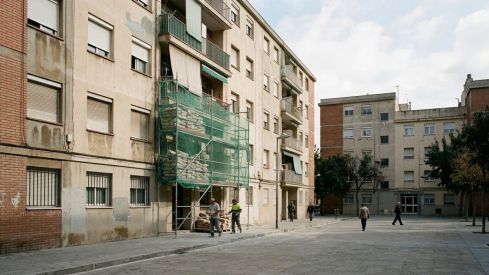
The Generalitat de Catalunya and the Barcelona City Council have closed a financial pact to inject 415 million euros over ten years for the urban regeneration of the Besòs i el Maresme neighborhood. This massive investment seeks to remedy the structural deficiencies detected in the housing stock of the Sant Martí district.
The agreement has been formalized within the Bilateral Commission between both administrations. The priority objective is to accelerate the rehabilitation of buildings constructed during the fifties and sixties that present risks to the safety of residents.
From 192 pilot homes to 4,000 homes intervened
The actions will not be limited to the current pilot plan. The administrations will expand the scope of the works to cover 4,000 homes distributed in 200 properties in the area. Currently, the program only affected nine buildings with a total of 192 households.
This expansion responds to the technical reports from the Municipal Urban Planning Institute. Experts identified serious deficiencies in the structure of many buildings from the Franco era that require urgent and coordinated intervention.
"It had been 20 years since a urban regeneration project of this magnitude had been proposed in Barcelona" - Jaume Collboni, mayor of Barcelona
To manage these funds and execute the works with greater speed, a new public limited company will be established before the end of the year. The Barcelona City Council will have the majority stake in this body, which will act as the governance and operational coordination body.
Jaume Collboni has defended that this legal formula will allow for greater agility and flexibility in the face of accumulated delays in interventions. The new structure also facilitates the release of municipal resources to attend to other areas with similar needs.
Resources released for La Trinitat Vella and La Pau
The bilateral pact has a direct effect on other districts of the city. The reorientation of institutional efforts towards Besòs allows for the allocation of specific funds to the rehabilitation of neighborhoods such as La Trinitat Vella and La Pau.
These areas also carry a historical deficit of public investment in housing maintenance. The mayor has linked the agreement with the residents' right to remain in their homes without suffering degrading conditions.
"A country operation to address a historical debt" - Albert Dalmau, counselor of the Presidency of the Generalitat de Catalunya
Albert Dalmau has described the understanding between institutions as a sign of trust and shared work. The councilor has underlined the need to guarantee a dignified life for the 25,000 inhabitants currently residing in the neighborhood.
The anonymous society will begin its administrative activity before December 31. Its first task will be to organize the execution deadlines for the 200 buildings included in the second phase of the plan.