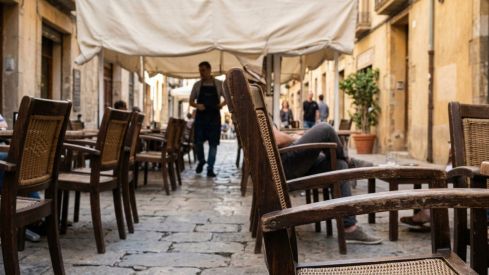
The Lleida City Council wants to change the image of terraces, shop windows, and facades with a modification of the Landscape ordinance that will require, within five years, the renewal of part of the outdoor furniture of bars and restaurants. The new chairs must have armrests, be dark in color, and be made of wood, wicker, textile material, or hard plastic such as polypropylene, while the awnings will have to be cream-colored.
The reform comes with a paradox visible on the street. The council allows the maintenance of already installed elements, such as chairs with commercial brands on the backrest and existing awnings, but at the same time tightens aesthetic criteria and limits advertising to organize a public space that, in the words of the municipal government, could not wait any longer.
The modification was validated in the City Management commission with the votes of the PSC and Junts, the abstention of Vox, and the rejection of PP, ERC, and Comú. The text will reach the plenary session next week, after which a month of public exhibition will be opened, and final approval is expected by the end of July.
The ordinance established more homogeneous terraces and reduced commercial advertising
The most visible change affects the catering industry. Establishments will have five years to adapt their terrace chairs to the new criteria of color, materials, and design, although they may keep those with commercial brands on the backrest if their presence is more discreet.
They will also be able to continue maintaining the awnings they already have installed, but the new rule sets cream color as the reference for new additions. In parallel, the presence of vinyls and advertising on commercial shop windows will be limited to 30% of the surface area.
Commercial signs will also see their format reduced. The ordinance restricts them to the name of the business and the corporate logo, and when they are framed at the entrance, they may occupy up to 20% of the door.
In addition, the text prohibits ornamental lighting in ground-floor premises when it is not part of the sign itself.
Begoña Iglesias, deputy mayor of City Management, defended that the norm incorporates solutions that are already present in the city. The councilor maintained that many establishments already use valid models within the criteria that the ordinance now includes.
"We have included different valid models within the ordinance, which many establishments already use" - Begoña Iglesias, Deputy Mayor for City Management, Lleida City Council
Junts supported the initial validation, although they announced changes. Violant Cervera, spokesperson for the group, announced that they will present an amendment so that restoration activities show in a visible place how many tables and chairs they have authorized.
The Historic Center incorporated rules for solar panels after more than a year of suspension
The modification does not only affect terraces and businesses. The ordinance will also regulate the installation of solar panels on the roofs of the Historic Center, an area where licenses have been suspended for more than a year.
The new regulation will prevent the panels from protruding from the roof or cornice, prohibits flat models, and requires them to match the color of the roofs or the chromatic chart of the Historic Center. This area is now considered an area of landscape interest along with La Seu Vella, Gardeny, and the riverfront facade of the Segre.
Iglesias linked this change to the lack of protection of certain viewpoints over the city. The municipal official identified the problem in the views obtained from the Turó de la Seu Vella and in the absence of specific regulation for this type of installation.
"We must organize the city's public space, we can't wait any longer" - Begoña Iglesias, Deputy Mayor for City Management, Lleida City Council
Along with these measures, the new ordinance will require electricity and telecommunications companies to remove disused cables from building facades.
Begoña Iglesias also specified that the suspension of licenses in the Historic Center was due to the fact that the views from the Turó de la Seu Vella were not protected and that the installation of panels was not regulated.