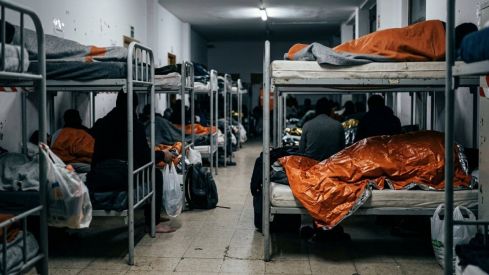
The seventh Fred Plan in Girona closed the campaign with 119 people attended between December 1 and April 30 in the former UNED building, ten fewer than in the previous winter. The facility operated every night from 8:30 PM to 8:00 AM with a low-demand model.
The decrease, however, does not translate into an improvement in homelessness. The Girona City Council maintains that the drop is due to less movement within the care network and longer stays within the resource itself, in a context of saturation of other services.
New entries dropped from 60 in December to 11 in April
The reduction in admissions was constant throughout the campaign. The Fred Plan registered 60 new entries in December, 26 in January, 14 in February, eight in March, and 11 in April.
The council links this trend to the sustained occupation of places by people with prolonged stays. It also relates it to low turnover and the saturation of resources such as La Sopa, therapeutic communities, or the 360º project.
During the days of highest pressure, the facility expanded its capacity for meteorological reasons. On January 5, it provided five additional beds due to cold, and in mid-January, it added another five due to heavy rain, with a maximum of 53 available places on those days.
Girona increased places for women from eight to 14 and adjusted distribution in March
The former UNED facility started with a base capacity of 48 places. Within that total, Girona increased the places reserved for women and people with dissident identities from eight to 14.
From March 30 onwards, the facility reassigned six of these places to men as female occupancy decreased. At the same time, it reserved six specific places for individuals under 25 linked to the street outreach team for young people.
Throughout the campaign, the profile of those attended was predominantly male. 86 men, 30 women, and three people with dissident identities passed through the resource, representing 72.3%, 25.2%, and 2.5% of the total, respectively.
By age, the largest group was those aged 18 to 29, with 38 people. This was followed by the 40 to 49 age group, with 30 users, and 50 to 59, with 23.
People aged 30 to 39 accounted for 17 cases, while the 60 to 69 age group had nine, and those aged 70 or over, two. In addition to overnight accommodation, the service provided showers and personal hygiene three days a week in the changing rooms of the municipal swimming pool of La Devesa.
On the last night the facility was open, 33 people stayed at the old UNED, with 28 men, four women, and one person with a dissident identity.